
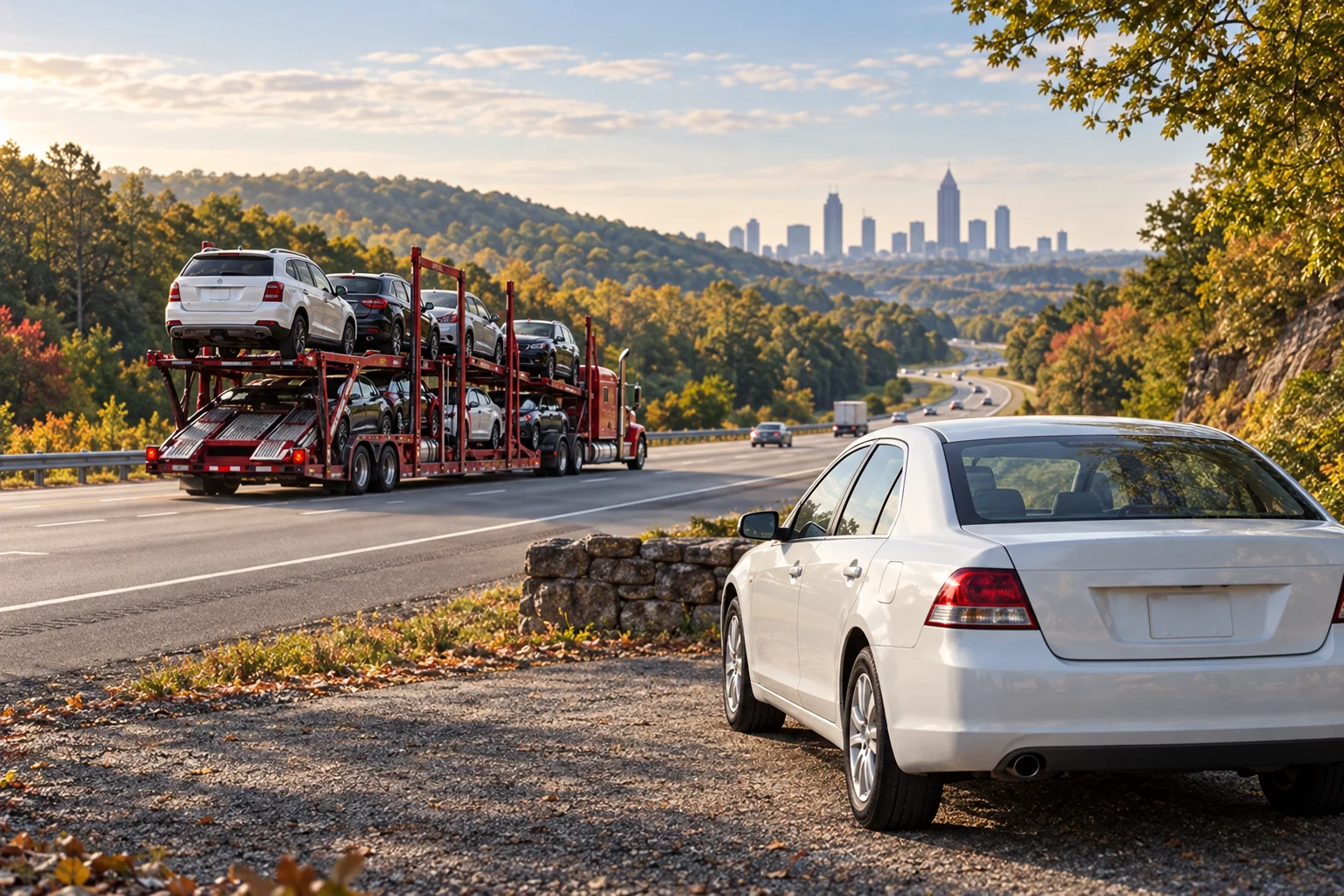
Busy carrier routes along I-75 and I-85 connect with I-20 in Atlanta. The traffic supports competitive pricing and quicker pickup than smaller markets. Use your route’s costs and scheduling conditions to compare shipping with driving.
The Atlanta factor: why your starting point changes the math
Return loads, or backhauls, help keep a carrier’s truck full in both directions. Atlanta’s steady pickup and delivery demand supports those routes, improving price and availability compared with a rural pickup two hours away. West Coast or Northeast shipments may be scheduled a day or two sooner than from a small market, with fewer pickup detours.
A car bound for Boise or Spokane may leave Atlanta quickly but pass through a regional yard near its destination. Allow an extra day compared with direct Los Angeles or New York routes. Arrivals into Atlanta from Chicago or Dallas tend to move quickly year-round, as do Orlando shipments, because those routes carry steady traffic.
The decision threshold: 500 miles, 800 miles, and what actually matters
Start with distance, then consider available time and the car’s condition. Packing and paperwork may leave little energy for driving. The thresholds below help frame that choice.
1 Under 500 miles
Driving usually suits a trip under this threshold: it can take one day, with the car staying with you and no extra overnight stop. Shipping a short route often costs as much without that convenience.
2 500 to 800 miles
Two drivers may manage this distance in a long day. A solo driver faces fatigue and an overnight stay. Shipping starts to compete when you value your time above 35 dollars an hour.
3 Over 800 miles
Limited time or a valuable car makes shipping appealing for most people at this distance. A two-car family can also drive one vehicle and ship the other to reduce the strain.
The thresholds assume a driver physically able to make the trip, favorable weather and a mechanically sound vehicle. A change in those conditions makes shipping worth considering at a shorter distance.
Full cost comparison: Atlanta routes priced side by side
Compare the full totals for driving and shipping. The initial quote doesn’t include every cost under either option.
| Route from Atlanta | Open carrier | Enclosed carrier | Transit window |
|---|---|---|---|
| South Florida | $500 to $800 | $800 to $1,100 | 2 to 4 days |
| Northeast (NY, Boston) | $700 to $1,100 | $1,100 to $1,600 | 3 to 6 days |
| Midwest (Chicago) | $600 to $900 | $950 to $1,300 | 2 to 5 days |
| Texas | $650 to $1,000 | $1,000 to $1,400 | 3 to 5 days |
| West Coast (LA, SF) | $1,100 to $1,500 | $2,360 to $2,625 | 3 to 8 days |
| Pacific Northwest | $1,300 to $2,000 | $2,000 to $2,800 | 7 to 12 days |
Expect an enclosed trailer to cost 40 to 70 percent more than open service. Limited enclosed capacity can push that to double. Early summer and late December bring price increases too, as moves follow school and holiday schedules.
What driving really costs from Atlanta
For an Atlanta-to-Los Angeles example, use a midsize SUV doing 26 highway miles per gallon over about 2,175 miles door to door. Georgia fuel is around 4 dollars a gallon, fluctuating with market prices and the 33.3-cent-per-gallon state excise tax. Include your time as well as trip expenses.
At optimistic consumption, fuel is about 335 dollars. Budget 350 to 500 dollars once traffic or headwinds affect mileage, along with elevation changes and idling.
Driving 550 to 700 miles a day allows three to four nights on the road without excessive fatigue. At 90 to 150 dollars a night, lodging totals 270 to 600 dollars. Food runs 30 to 60 dollars per person daily; allow 150 to 300 dollars for two people sharing the drive. Northeastern tolls can exceed 60 dollars in a day, while Southern or Western routes may have few.
Spread tire cost across the set’s lifespan and the cross-country wear comes to about 40 to 80 dollars. An oil change brought forward adds 50 to 120 dollars. For depreciation, assigning another 100 to 200 dollars to a 2,000-mile highway drive is reasonable, though less precise.
Four driving days plus a recovery day have a time value of 1,400 to 1,750 dollars at 35 dollars an hour, before unpacking begins. You may not treat that as a cash expense. For someone losing work time, it can drive the decision.
All-in estimate: Driving Atlanta to Los Angeles can cost 900 to 1,700 dollars with conservative travel and no price assigned to your time. Adding time and realistic wear takes the comparison to 1,800 to 3,000 dollars, overlapping open-carrier pricing on many long routes.
What shipping costs on the same routes
A quote well below other carrier or broker estimates warrants questions. Reliable prices usually fall in a fairly narrow band for the same week. The broker may be hoping a driver takes a low-priced order to fill spare space; if none does, pickup can wait for days.
Ask about non-running-vehicle and oversize charges. Check redelivery fees if the destination can’t accommodate the truck, and storage charges if you can’t accept the car. Review them before booking.
Other costs to include
Recovery time belongs in the driving comparison. After a week spent packing or preparing a home sale and finishing a job, an Atlanta-to-Phoenix drive can leave you aching by day three. Arriving with the household movers and starting work the following morning leaves little time to recover. Utility changes and closing paperwork add to that workload.
Access can add time to shipping. Inside the perimeter, a large carrier may be unable to use narrow streets or pass under trees, with parked cars reducing space too. A driver may arrange a permitted meeting at a grocery or retail lot. Dispatchers use suitable areas around Midtown and Virginia-Highland, as well as Old Fourth Ward. Curbside pickups are common in Alpharetta or Marietta, and in Peachtree City where turnarounds are easier.
Shipping logistics in Atlanta: what happens at pickup
Before pickup, wash the car and photograph its panels and wheels in good light so scratches are visible. Keep fuel at a quarter tank. Remove toll tags or pause the account for transit, then fold mirrors if possible and secure loose splitters or roof racks. Give the driver a spare key.
Find a nearby wide lot in advance if the carrier can’t enter your street. For an apartment or condo, notify management or the concierge so the handoff can use a designated area without towing trouble.
Personal items: Federal guidance and carrier policies discourage or prohibit household goods inside cars on open carriers. Extra weight can prompt rejection at pickup. Light goods below the windows may pass, but the position remains unclear. Discuss any intended load with the broker before pickup.
Inside the perimeter vs. suburban pickups
Inside I-285, carriers commonly meet at retail lots or wider streets because narrow approaches and tree cover limit access. Northern suburbs typically offer actual door-to-door pickup. Ask about meeting points for a dense coastal destination too. A local carrier yard can save time and avoid hurried unloading in downtown traffic.
Broker vs. carrier: who actually moves your car
A motor carrier owns or operates the trucks and physically moves the car. It holds carrier authority and carries liability and cargo insurance. A broker arranges transport with a carrier, holds broker authority and maintains a surety bond or trust. It doesn’t own the truck.
A carrier offers its own trucks, limiting alternatives if one is late or breaks down. A broker can use a wider carrier network. It isn’t vicariously liable for driver negligence unless it controlled the driver’s time and driving conditions. A damage claim goes to the carrier’s insurance.
You may gain access to otherwise hard-to-book carriers through a reputable broker. Before pickup, identify the assigned carrier and confirm active insurance with sufficient limits.
Insurance and damage claims
Carriers must have cargo insurance, with varying policy terms. Most for-hire interstate property carriers using vehicles above 10,001 pounds gross vehicle weight need at least 750,000 dollars in public liability protection. Under 10,000 pounds, the minimum is 300,000 dollars. Household-goods cargo minimums are 5,000 dollars per vehicle and 10,000 dollars per occurrence, with many auto carriers holding more.
Request an active insurance certificate with cargo limits appropriate for the vehicles on the load. For damage, the bill of lading is central: damage recorded at delivery is a claim, while damage found after signing a clean receipt usually isn’t. Inspect before signing, note new damage and photograph it before the driver leaves. Notify the carrier promptly with supporting documents. The Carmack Amendment allows at least nine months after delivery for a formal claim.
One to three percent is the common damage-claim range on mainstream routes, varying with season and route quality. Paint chips or scuffs account for most claims. Enclosed service lowers the rate, which can justify the premium for classic or exotic cars, including newly restored vehicles.
The two-car household: when driving one and shipping one makes sense
Drive the car you need from the first day and send the other if you can manage without it for a week. A two-car family can avoid making both trips by road this way.
In a Marietta-to-Denver example, the SUV reaches the new home in two days with a spouse driving, children and pets aboard, and essentials packed. The commuter sedan travels open for 700 to 1,000 dollars and arrives in three to five days. The family has immediate transport without two long drives.
For a classic or high-value vehicle, use enclosed shipping and drive the everyday car. You’ll have transport immediately while the more valuable car travels protected.
When driving still wins and when it does not
A move within 400 miles often favors driving. You can finish in a day and keep the car with you, while shipping may cost just as much. Regional Southeast trips can suit someone who wants immediate car access and is comfortable with a highway day.
If you enjoy the road trip, its value can outweigh the cost comparison. A couple might stop in a college town where they met or allow time for the transition between homes.
Consider shipping when the route crosses winter conditions or mountain passes. Desert travel and storm-prone areas can also make driving stressful or unsafe. Worn tires or brakes, or questionable cooling components, raise the chance of a breakdown. Account for the strain of traveling with children or pets too.
Plan for interruptions
Include the cost of an interrupted trip in the comparison.
A breakdown in Kansas can mean days waiting for repairs, with a missed move-in date and extra meals or hotel nights. Those costs can exceed what driving saved.
If the car is late and work starts before it arrives, a rental adds 40 to 80 dollars a day. Delivery to an inaccessible street may mean meeting across town. Damage discovered after signing a clean bill of lading leaves little recourse.
These interruptions are usually manageable but cost real money. Choose the method that fits your circumstances and tolerance for risk.
Seasonal timing: when to book and when to avoid
June through August brings relocation and military demand, with college moves adding pressure. Atlanta route prices rise 15 to 25 percent over baseline. Late peak-season bookings can add 20 to 30 percent.
Watch the whole route in winter. Ice in Ohio or snow in the Rockies can shift schedules a thousand miles away despite mild Atlanta weather. For a January trip to Denver, check forecasts three states ahead. Shipping needs flexibility too, since a carrier may wait on a safer southern route rather than enter icy conditions.
Capacity tightens around Thanksgiving, particularly for enclosed loads of collectibles headed to winter storage. Late December brings higher prices and fewer drivers. Demand resets quickly in January’s first week, but pickup may lag while carriers rebuild routes.
Pros and cons of shipping and driving
Shipping: strengths and limits
- Saves time and preserves vehicle value
- Professional insurance coverage during transit
- Enclosed options for high-value vehicles
- Less control over exact pickup and delivery times
- Higher upfront cost than driving on short lanes
- Personal items cannot be shipped inside the vehicle
Driving: strengths and limits
- You choose departure time and route, with stops under your control.
- Lower out-of-pocket cost on short moves
- Car is immediately available at destination
- You manage driver fatigue and weather, along with any breakdown.
- Vehicle wear and depreciation add to the cost, as does your time.
- Safety risk increases with multi-day solo drives